CardiacSense

Visit Website

CS Watch 3: Medical-grade wrist-worn device combining PPG and ECG sensors for continuous atrial fibrillation detection and cardiac monitoring

Tech PPG + ECG Dual Sensors
CE 2797
FCC 2A4CTCS322
Location Caesarea, Israel
Company Overview

CardiacSense operates from Caesarea, Israel as a medical device company developing wearable cardiac monitoring technology for home healthcare environments. The company's headquarters at 6 Leshem St. in Northern Industrial Park serves as the base for their CS System 3 product line, which targets the growing market for atrial fibrillation detection outside clinical settings.

The company maintains European market access through authorized representatives: MedNet EC-REP GmbH in Münster, Germany for EU operations and MedNet SWISS GmbH in Baden, Switzerland (CHRN-AR-20000730) for Swiss distribution. The business model combines direct-to-consumer hardware sales with subscription cloud services for data storage and monthly reporting, operating within HIPAA and GDPR compliance frameworks for medical data management.

CardiacSense positions itself in the medical-grade wearable segment rather than the consumer fitness tracker market. The CS Watch 3 received CE marking (2797) under EU Medical Device Regulation 2017/745 and FCC certification (2A4CTCS322), though FDA clearance status remains unclear from available documentation. The company targets adults 18+ seeking home cardiac monitoring, particularly individuals with atrial fibrillation risk factors or existing cardiac conditions requiring continuous oversight between medical appointments.

Technology

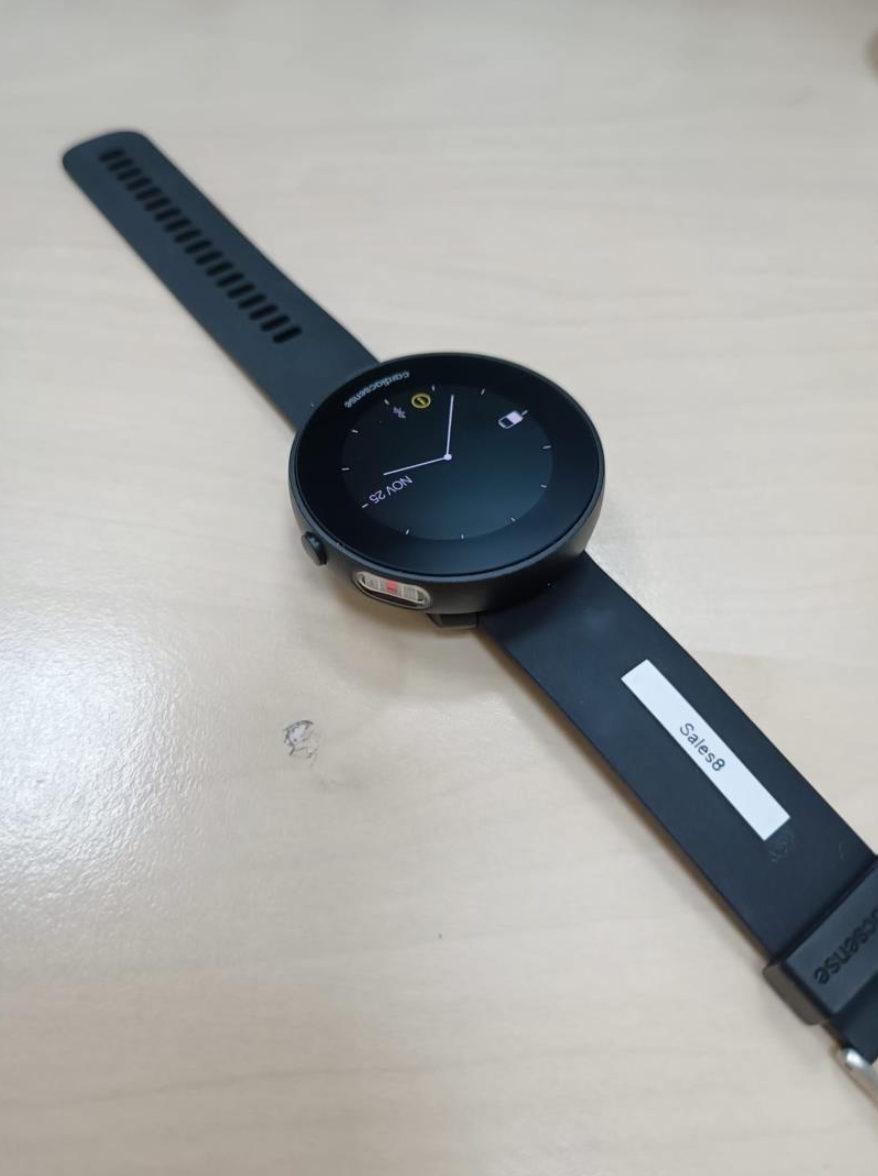
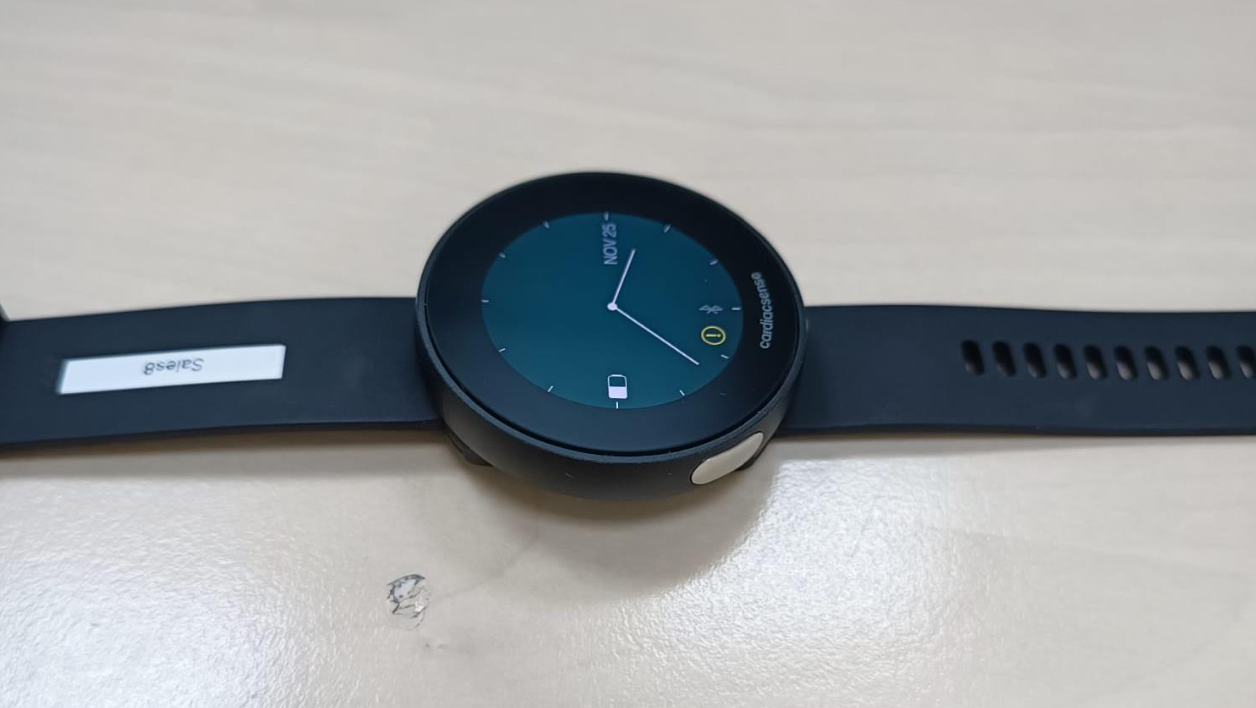
Dual Sensor Architecture — CardiacSense combines photoplethysmography (PPG) and electrocardiography (ECG) in a wrist-worn form factor measuring 44mm diameter × 15mm thickness and weighing 40 grams. Two green LEDs on the watch back illuminate wrist tissue while photodetectors measure reflected light variations to derive continuous pulse rate data. Three stainless steel electrodes enable single-lead ECG capture when users place a finger on the upper sensor, completing the circuit through wrist contact.

The PPG system samples continuously with proprietary algorithms compensating for hand and finger movement interference. When irregular rhythms suggesting atrial fibrillation persist for 5+ minutes, the watch vibrates and displays an "AF" notification, prompting ECG confirmation. The ECG subsystem operates at 128 Hz sampling with 0.5–40 Hz frequency response, 10 mV peak-to-peak input range, 17-bit resolution, and 5 GΩ common-mode input impedance. Both modalities achieve 95% sensitivity and 95% specificity for A-Fib detection.

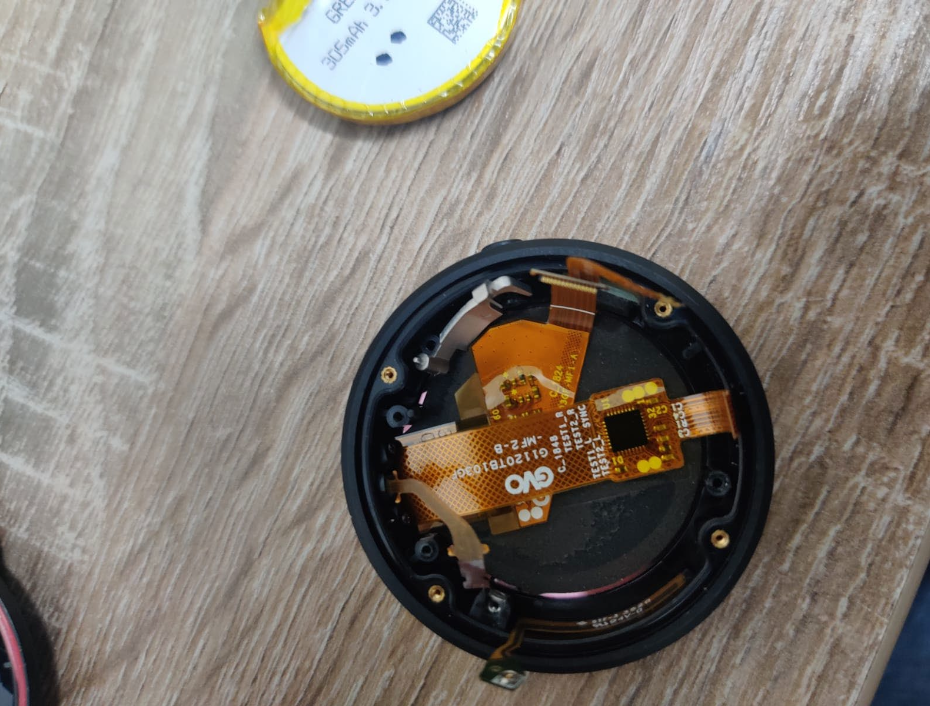
Pulse rate measurement spans 30–220 BPM with ±2% or ±2 BPM accuracy. The system stores minimum 72 hours of data locally, transferring measurements via Bluetooth 4.0 Low Energy (4m range) to paired iOS 12-14 or Android 7-10 smartphones. A 300 mAh lithium-ion battery (GREPOW 403327, 3.85V, 1.17Wh) provides approximately 48 hours continuous operation, recharging fully in 2 hours via magnetic pogo-pin cradle. The device carries IP67 water resistance rating (protected from dust and immersion 15cm–1m depth) and expects 24-month battery lifespan under typical use.

Clinical Performance

CardiacSense documentation specifies 95% sensitivity and 95% specificity for atrial fibrillation detection via both PPG and ECG modalities, though the user manual (Version B1, June 2022) does not reference specific published clinical trials or peer-reviewed validation studies supporting these metrics. The device meets IEC 60601-2-47:2012 standards for ambulatory electrocardiographic systems and IEC 60601-1-11:2015 requirements for home healthcare environments.

Pulse rate accuracy of ±2% or ±2 BPM across the 30–220 BPM operating range positions the device within typical specifications for consumer wearables, though direct comparison against arterial line or clinical-grade ECG monitoring has not been documented in available materials. The system employs movement compensation algorithms to reduce false positives during daily activities, though specific performance metrics under different activity levels remain unpublished.

The watch includes currently inactive SpO2 and blood pressure sensors, suggesting future functionality expansion pending additional validation and regulatory clearances. CE marking under Notified Body 2797 confirms compliance with EU Medical Device Regulation 2017/745 and ISO 14155:2011 clinical investigation standards, though the absence of FDA 510(k) clearance number in reviewed documentation indicates potential limitations for US medical claims compared to competitors like LiveMetric (K201302) or Healthstats (K060315, K173028).

95%
A-Fib Sensitivity
PPG + ECG
48hr
Battery Life
Continuous Use
128Hz
ECG Sampling
17-bit Resolution
72hr
Local Storage
Minimum Data
Market Position

CardiacSense targets the home cardiac monitoring segment with focus on atrial fibrillation detection rather than comprehensive vital signs tracking. The device competes against Apple Watch (wrist ECG, irregular rhythm notifications), AliveCor KardiaMobile (smartphone-based ECG), Withings ScanWatch (hybrid smartwatch with ECG), and Fitbit (PPG-based rhythm monitoring). CardiacSense differentiates through medical device certification (CE 2797) and continuous PPG screening combined with on-demand ECG confirmation, though it lacks the brand recognition and ecosystem integration of consumer electronics manufacturers.

The subscription model for CS3 Cloud services (automated monthly reporting, HIPAA/GDPR-compliant storage) positions the product as an ongoing service rather than one-time hardware purchase. This approach targets chronic disease management and post-procedure monitoring use cases where longitudinal data trending provides clinical value. Geographic focus centers on Europe (CE marked with EU and Swiss representatives) and potentially international markets, though unclear FDA status may limit US medical claims relative to 510(k)-cleared competitors.

User restrictions exclude individuals under 18, pregnant/breastfeeding women, pacemaker/ICD users, and those with blood flow deficiency conditions or skin abnormalities at measurement sites. The 14–20 cm wrist circumference requirement and mandatory smartphone pairing (iOS/Android compatibility lists) further constrain addressable market. Competition from established ABPM manufacturers (Omron, Spacelabs) using traditional arm-cuff technology and newer optical approaches (Aktiia) creates a fragmented landscape where CardiacSense occupies a niche between clinical-grade Holter monitors and consumer wellness trackers.

Sources
Product Design
Back view with PPG sensor array
PPG Sensor Array
Charging contacts
Charging Contacts
Display and ECG electrodes
Display & ECG Electrodes
Watch face with strap
Complete Watch
External Product Photos
Hardware Teardown
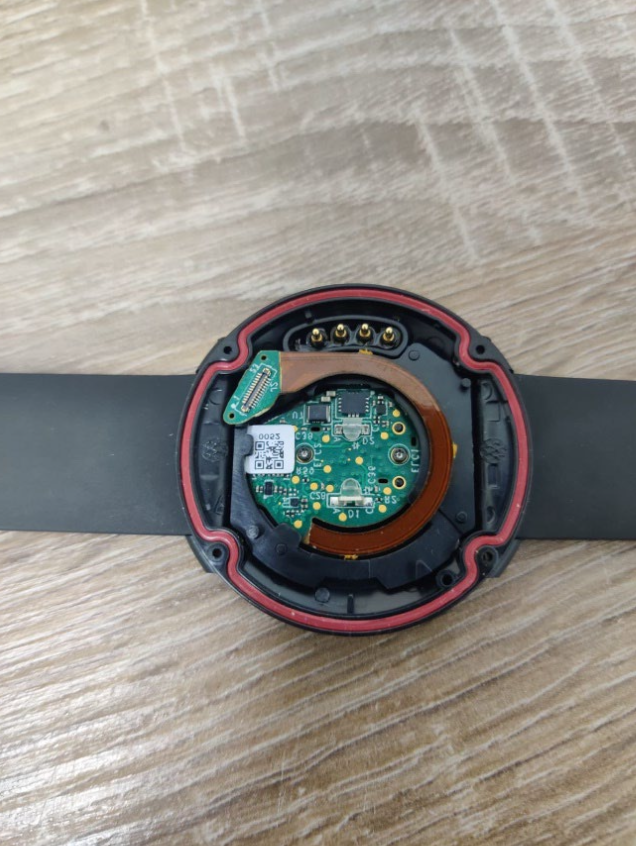
Internal PCB assembly
Main PCB Assembly
GREPOW battery
GREPOW 403327 Battery
Flex circuit board
Flex PCB Detail
Components closeup
Component Layout
Internal Teardown Photos