Vita-Course

Visit Website

Shenzhen-based developer of the Discovery 1 cuff-less blood pressure monitor using pulse wave transit time technology

Tech Pulse Wave Transit Time
FDA 510(k) Cleared
Founded 2013
Location Shenzhen, China
Company Overview

Vita-Course Technologies Co., Ltd. was founded in 2013 and is headquartered in Shenzhen, Guangdong Province, China. The company develops non-invasive hemodynamic monitoring equipment with a focus on cuff-less blood pressure measurement technology.

With approximately 11 employees and offices in Hainan Sheng and Shandong Sheng, Vita-Course positions itself as an emerging health management service provider. The company's flagship product, the Discovery 1, received FDA 510(k) clearance (K190893) in 2019, marking a significant regulatory milestone for cuff-less BP monitoring.

Vita-Course holds 84 patents in their technology portfolio, demonstrating sustained innovation in pulse wave-based physiological monitoring. The company targets both medical institutions and home health markets with their wearable continuous monitoring platform.

Technology

The Discovery 1 employs pulse wave transit time (PWTT) combined with pulse wave morphology analysis to estimate blood pressure without requiring cuff inflation. The system uses a dual-wavelength PPG sensor:

Sensor Technology: Infrared (905nm) and red light (660nm) photodiode sensor captures pulse waveforms from fingertip capillary tissue. The device calculates pulse wave conduction time along the arterial tree and extracts characteristic parameters from pulse morphology (amplitude, rise time, dicrotic notch) to derive systolic and diastolic pressures through proprietary algorithms.

Calibration Requirement: Unlike traditional oscillometric devices, the Discovery 1 requires initial calibration using a mercury sphygmomanometer or validated oscillometric device. Users input reference BP values into the mobile app, which personalizes the PWTT-to-BP mapping for individual arterial properties.

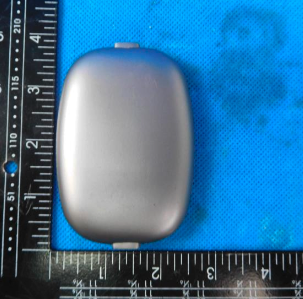
Platform Architecture: The system comprises a wrist-worn host unit (90mm x 64mm x 17mm, 150g), fingertip PPG sensor, Bluetooth 4.0 BLE connectivity, rechargeable 3.7V/2200mAh lithium battery, and Discovery 1 mobile app (iOS 8.0+, Android 4.3+). The built-in OLED display shows real-time measurements without requiring phone connection.

Continuous Monitoring: The device supports 24-hour dynamic continuous measurement with programmable intervals, automatic sleep mode, and onboard storage of measurement history. Battery life extends to multiple days of continuous monitoring depending on measurement frequency.

Clinical Performance

FDA 510(k) Clearance (K190893): The Discovery 1 received FDA clearance for blood pressure trending (not diagnostic spot-check) and peripheral pulse rate measurement. This classification acknowledges the device's utility for monitoring BP changes over time rather than single-point clinical diagnosis.

Accuracy Specifications: Within the validated range (systolic 70-180 mmHg, diastolic 40-130 mmHg), the device claims mean difference ≤±5 mmHg and standard deviation ≤8 mmHg compared to auscultatory reference, meeting YY 0667-2008 (Chinese standard) but with wider tolerance than AAMI SP-10 requirements (±5 mmHg mean, ±8 mmHg SD).

Measurement Range: Systolic 50-200 mmHg, diastolic 40-160 mmHg. Pulse rate: 40-240 bpm with ±2% or ±2 bpm accuracy. Display resolution: 1 mmHg for BP, 1 bpm for pulse.

Limitations: The user manual explicitly notes that common arrhythmias (atrial fibrillation, premature ventricular contractions) may affect accuracy. Patients with heart pacemakers, stents, or beyond the measurement range may experience reduced accuracy. The device is contraindicated for users under 16 or over 70 years old.

Clinical Validation: No peer-reviewed published validation studies were found in public databases. FDA clearance suggests adequate bench and clinical testing, but independent validation data is not publicly available.

±5mmHg
Mean Error
vs. Auscultation
24hr
Continuous
Dynamic Monitoring
84
Patents
Technology Portfolio
2019
FDA Cleared
510(k) K190893
Market Position

Vita-Course entered the cuff-less BP monitoring market with FDA clearance as a "trending" device, a regulatory classification that acknowledges technical challenges in achieving diagnostic-grade accuracy without calibration. This positions the Discovery 1 as a monitoring tool rather than a diagnostic device.

The calibration requirement differentiates the Discovery 1 from emerging calibration-free wearables (Aktiia, Samsung Galaxy Watch) while maintaining closer accuracy to reference standards. This hybrid approach targets users willing to perform periodic calibration in exchange for improved accuracy during continuous tracking.

Key competitive factors: FDA 510(k) clearance provides regulatory credibility lacking in many consumer wearables; 24-hour continuous monitoring enables ambulatory BP profiling impossible with periodic cuff measurements; Chinese manufacturing offers cost advantages but may limit market penetration in Western healthcare systems prioritizing domestic suppliers.

The device competes with established ABPM systems (Oscar 2, Spacelabs OnTrak) on convenience but lacks their diagnostic validation. Against consumer wearables, the Discovery 1 offers regulatory clearance and medical-grade claims but with less seamless user experience (fingertip sensor, calibration requirement).

Market penetration appears limited based on minimal commercial presence and absence of published clinical adoption studies. The company's small size (11 employees) suggests constrained resources for scaling manufacturing, clinical validation, and market development.

Sources
Product Design
Discovery 1 with accessories
Complete Kit
Front view with power button
Front View
Back view
Back View
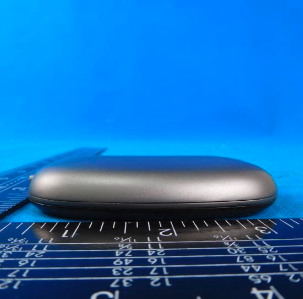
Side profile
Side Profile
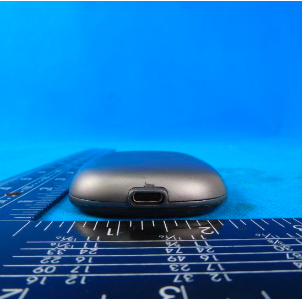
Side angle view
Side Angle
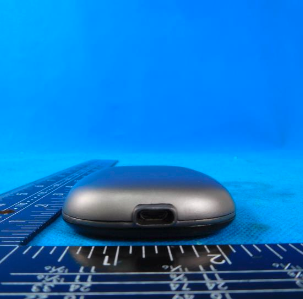
USB port detail
USB Port Detail
External Product Photos
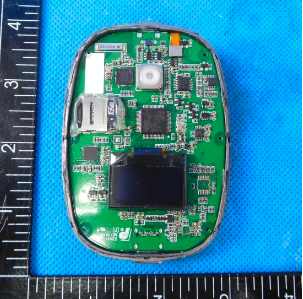
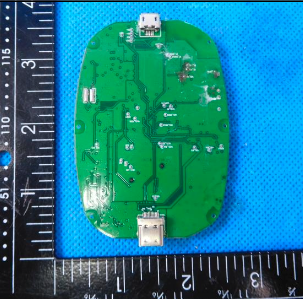
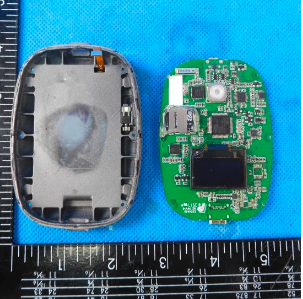
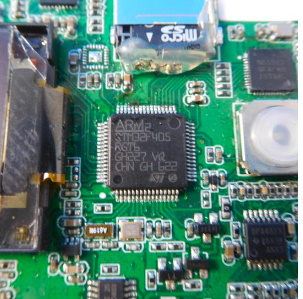
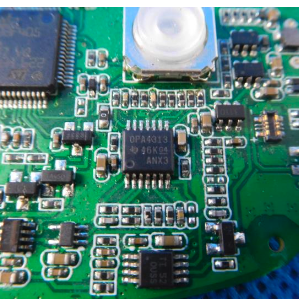
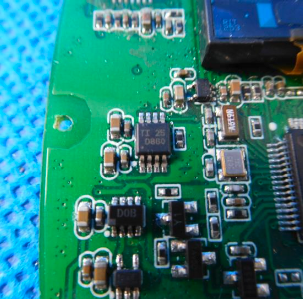
Hardware Teardown
Main PCB top view
Main PCB Top
PCB bottom view
PCB Bottom
Housing and PCB assembly
Assembly View
Processor detail
Processor Detail
Display connector
Display Connector
Battery compartment
Battery Area
Internal Teardown Photos